Showing posts with label n950. Show all posts

Wednesday, March 28, 2012

gPodder 3.1.0 in Apps For MeeGo Staging and Nokia Store

A new version of gPodder has been released, and the package is already available from Nokia Store here, and waiting for your QA feedback in Apps For MeeGo here. This works for both N950 and N9 users. To get access to Apps For MeeGo, go to http://apps.formeego.org/ on your device, and install the Client from there.

The new gPodder version comes with some improvements for Harmattan users:

  • Redesigned artwork for the main window and episode list
  • Better arrangement of podcast list and cover artwork there
  • New preferences menu, containing gpodder.net and orientation settings
  • New empty state UI for first-time users
  • Various other changes to be more in line with the UX Guidelines
  • Context menu item to delete episodes without downloading them

I hope you enjoy this new release - please report any issues you find or ideas you have at http://bugs.gpodder.org/ - and don't forget to QA the package in Apps For MeeGo.

Saturday, January 14, 2012

The N9 week: Hack-A-N9, gotoVienna, Camerra, gPodder

While the first week back in Vienna after the holidays was sad for a Maemoista walking around in the city (aka Admazing (sic) Everyday), there was also enough time to release gPodder 3.0.3 (already in AFM - thanks, testers!), catch up with local Maemoistas at the Hack-A-N9 and work on gotoVienna, the Camerra hack and even more post-3.0.3 gPodder goodness. But one after the other..

gotoVienna is a public transport live ticker app by kelvan. In the days after meeting at the Hack-A-N9, we implemented a nice line number input UI that makes it easy to quickly get live information for a given line - the code is in Git, and as a side-product, merlin1991 has implemented a stdeb/distutils extension to inject an Aegis manifest and create the digsigsums file - check it out if you want to build Python packages for Harmattan without Scratchbox/the SDK.

Next up is the Camerra hack, a quick'n'dirty "app" that monitors the Volume+ hardware button and (when the Camera UI is in the foreground) simulates a click on the shutter button, effectively making the Volume+ work as a shutter button. Ideal for all your self-portraying needs! It's called a hack, because it uses the likes of xprop and xresponse directly - a "proper" implementation would use QmSystem, XTest and Xlib from C/C++, just in case someone feels like spending time on rewriting something that Works For Me ;) There's a support thread on t.m.c, the Python and PySide powered code is available on Github, and the package is available on the website and (hopefully soon) also on Apps For MeeGo.

As for the post-3.0.3 gPodder goodness: Episode list filters (bug 1527) are currently being developed, a first patch is already written, and screenshot 1 and screenshot 2 show you how it currently looks. Don't forget to report any bugs and feature requests over at bugs.gpodder.org - don't keep them for yourself! :p

And now for the next two weeks for something completely different (i.e. Uni semester wrap-ups, exams, lab interviews and lab exercises).. ;) Enjoy the newly released stuff!

Monday, January 9, 2012

gPodder 3.0.3 for Harmattan

A new version of gPodder - a podcast and video manager - has been released today. In addition to improvements to the existing YouTube support, this version adds support for downloading videos from Vimeo (so if you wanted to get ahold of ye olde Maemo 5 "Getting Started" video from two years ago, subscribe to metalab on Vimeo, but I'm pretty confident that you can come up with better uses of the Vimeo support ;).

Anyway, the new king of Harmattan repos is Apps For MeeGo, as everyone knows, and so start your Community QA engines and review gPodder 3.0.3 in Apps For MeeGo Testing. If you don't have the Apps For MeeGo Client on your N950 or N9, click here to download the enabler. It has also been uploaded to Ovi Publish, but if and when it appears there is anyone's guess. Don't hold your breath and switch to Apps For MeeGo for downloading (and publishing if you do!) your open source Harmattan apps.

The 3.0.3 version of gPodder packs some long overdue improvements to the Harmattan QML UI (for example, the toolbar has been cleaned up, an about box has been added and you can now check for new episodes from the toolbar) with more to come in the future. In general, 3.0.3 should provide you with a more Harmattan-esque user experience. You can always get your wishes and problems heard at the gPodder bug tracker - make use of it! :)

Saturday, January 7, 2012

Maemo devices in movies: 770 and N950

Jukka just posted "No such thing as silver N950 except for Transformers 3 ;)", which reminded me of the movie appearances of the Nokia 770. But first to the silver N950 appearance which I somehow missed: A quick TMO "site:"-search reveals the obligatory thread for the N950-in-Transformers 3 appearance with a frame grab by ro25anav:

As for the 770, it starred in a Harold and Kumar movie, in a Fantastic Four movie and in a Die Hard movie, but you probably already knew that. The 770 appearances are well documented (with screencaps) over at starringthecomputer.com if you don't have the time to watch all three movies. Any other movies in which Maemo devices appear? What about the N800, N810 and N900? Googling doesn't really yield any useful results, with most hits being about "watching movies on device so and so".

Sunday, December 4, 2011

This weekend's releases: Tap Tap N950, qw.py and the IP Address Widget

Over the weekend, I've pushed out some code for your enjoyment: First up is the incomplete but maybe interesting QML source code of the Tap Tap N950 prototype. I probably won't find time to work on this, but it would be sad to let the small piece of code rot - maybe someone wants to pick up the development of it. I'll answer any questions related to the code in the thread :)

Next up is the open source release of the qw prototype "qw.py", which has been developed during the Super GameDev Weekend 2010 at the Metalab Vienna last December (the next one is at the upcoming weekend; stop by if you are in Vienna!) - nearly 1 year ago. This is not the same as qw The Game in Ovi Store, but it's an earlier version, which still contains multi-player support (4 players on one PC keyboard), and it's written in Python, so it should be easily hackable.

And last but maybe not least is the IP Address "Widget" for Harmattan. This small hack (which is inspired by the earlier Calenderr calendar icon hack) makes use of the fact that the Harmattan UX reloads the icon of an application whenever the .desktop file or the icon file itself changes. The details (and a .deb for easy installation) can be found on the website - basically it shows a way to have semi-interactive "widgets" on the app list on Harmattan. I'm sure that creative readers can come up with some cool ideas :)

Monday, November 21, 2011

Plonk (formerly known as Mong) for Harmattan

Plonk (formerly known as Mong, but renamed since) is now available in Nokia Store for the N9 and N950 as free download:


This is a multi-touch game for two persons, so go out into the big blue room and ask somebody to have a game of Plonk with you :) As you probably already know, this game has been developed at the MeeGo Conference in collaboration with Cornelius Hald and Tim Samoff - sounds have been recorded directly at the hacker lounge by Erik Stein, and Randall Arnold came up with the new name. A real collaborative project, and the source is available from Gitorious! One challenge with Harmattan was disabling Swipe, we solved that with a nifty little class called SwipeControl - it's open source if you want to use it in your game, too :)

Tuesday, November 15, 2011

Hack Tuesday: Tap Tap N950 and Calenderr

The unexpected lack of lectures today (Tag des Landespatrons) left time for some one-off hacks, and here are two for you:

First up is Tap Tap N950, a very basic QML prototype of what could become a funny DDR/TTR clone - no code published yet, it still need some more polishing (and touch area support for multi-touch, plus scoring is also missing).

The other one is a simple hack to make the Calendar app icon always show today's date (day-of-month). The existence of calendar icons for each day (1-31) in the theme on the device lets me suspect that this feature was either planned and then abandoned or that it will come built-in in some future firmware. For now, you can grab this lame shell script and execute it (ideally with "nohup" - see the comment inside - also needs customizations if you changed your root password, and you definitely need developer mode for now) to have an auto-updating calendar icon until the next reboot. Watch the accompanying video for a quick demo. There's now also a forum thread for support and discussion. Sometimes I really wish cron was pre-installed on Harmattan..

Bonus exercise: Store your app's .desktop file in /home/user/.local/, generate the icon dynamically via code and update the .desktop file for some icon overlay action / new items notification ;)

Thursday, October 20, 2011

Games (and their backstory) for your N9, N900 and N950

I've recently been asked again about the games I wrote for mobile devices, so here it is: The post with an overview of the games, with some not-so-well-known backstories and information on where to get them for different devices. Plus a little teaser hidden somewhere.

Gaberln (N950, N9 (+Symbian): Ovi Store, N900: Maemo Talk)
This game is a simple soccer ball juggling game - developed using QML, in collaboration with Tim Samoff, who did the great artwork (and who also did the Mong artwork) - we still have to add some more features, and Tim has already done the graphics for a special hacky sack mode, let's hope we get around to finishing it at some point :)

qw The Game (N950, N9 (+Symbian): Ovi Store, N900: .deb on request, @qwgame)
This game is similar to Qix, but has its own style, and the enemies are a bit different from Qix - but it basically is an area filling game. The reason why the game is called "qw" is because it started out as a small Python hack (qw.py) during the Super Gamedev Weekend 2010, and qw were the first two letters on my keyboard. A nicer explanation is that it can be spelt (in German) like Cuvée and a reference to the different blend of different photos (flowers, places, animals) that you have to play through. The photos have been done by vogelvau, the menu structure is done using QML and the gameplay itself uses a QGraphicsView-based drawing engine.

That Rabbit Game (N950, N9, N900 (+Symbian): Ovi Store, @thatrabbitgame)
This is my first game to be published in Ovi Store; it's a "inverse duck hunt"-style game where you control the flying rabbit head, and have to get yourself shot by approaching the crosshairs and keeping steady. Flapping the wings is done by touching (the strength depends on the duration of the touch) and moving left and right is done using the accelerometer. The initial version of this game was developed in Java as an Android game for an OpenGL ES course at our University (PDF). The game for Maemo, MeeGo and Symbian is a complete rewrite in C++/Qt with the artwork taken from the original game, which I did myself in Inkscape. There is also a webOS port using OpenGL ES.

Tennix (N900, N8x0: Extras)
This one is quite old, and is actually based on a really, really old codebase of a school project from 2003. In 2007, I decided to port it to SDL for Desktop Linux, Mac OS X and Windows, and since SDL is available on Maemo as well, I then ported it to Maemo 4 in January 2008. A special "2009 Edition" was created for the N900, with updated controls and a Python-based AI enemy (using the CPython API / libpython). What about Harmattan you ask? Well..

Some of these games are just free and closed source for now. I do, however, definitely plan to release them as open source in the future. The problem is having used non-free artwork in the early prototyping stages (i.e. getting "something" visible in the engine) before replacing them with my own artwork, so I'll have to make sure to remove these things from the repository history before publishing the source. Also, code cleanups need to be done ;)

Download and enjoy the games - I'd be grateful if you could leave some feedback (either via Ovi Store, Maemo Talk, comments here or e-mail).

Wednesday, October 19, 2011

gPodder 2.20 for Maemo 4 and Maemo 5, 2.950.14 for Harmattan

gPodder 2.20 has been released. New packages are already available for Maemo 4 (in Extras) and Maemo 5 (in Extras-Testing). If you are using gPodder on Maemo 5, please test the package and vote for it on the package page, so it can get promoted to Extras when it has been tested by the community.

For all N950/N9 users: The Harmattan build of the gPodder QML UI is available for free in Ovi Store. The version available in Ovi Store is a development snapshot of the "tres" branch, where we will have an official release soon. I'm using it on a daily basis, and it's very stable and usable - new features will be added as we go along, so check out the new gPodder! You can grab the source code from the harmattan branch in our Git repository.

Monday, September 19, 2011

SwipEout - Python + OpenGL ES 2.0 on the N950 (and N900!)

Last weekend I've been toying around with Open GL ES 2.0 on the N950 after finding a nice Xlib-based Python example on the web for the N900. I modified the code a bit, replaced the Xlib code with a QGLWidget from QtOpenGL (via PySide), which makes the setup a lot easier and (apart from API differences of GL ES 2.0 and Desktop GL) allows me to test the prototype on my normal computer as well.

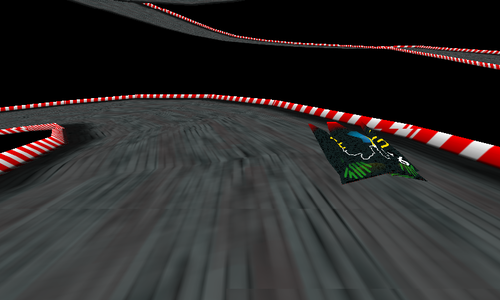
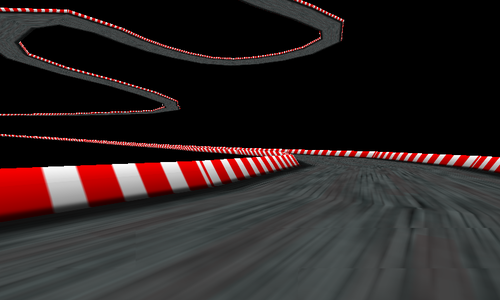
After I got the hang of it, I decided to come up with some fancy 90s-style hover racing game (only texturing, no lighting), or at least parts of it - right now, the small hovercraft just runs around the track and you can shift it left and right via the touchscreen and switching between normal and bird's view by pressing any hardware key.

As for the GL ES bindings (this is the interesting/useful part to developers who want to access the GL ES 2.0 API from Python), I put together a naive header-to-ctypes binding generator for the GL ES 2.0 API which you can run on "gl2.h" from the Qt SDK's Madde sysroot (too lazy to search for a working binding generator that surely exists somewhere out there already) - or just grab the generated "gles2.py" from the SwipEout source tarball. The result? Video it yourself.


You can grab the source code and miscellaneous files from the SwipEout website. The code was tested on the N900 and N950, you only need Python, PIL (python-imaging), PySide and the Open GL ES 2.0 libraries (libGLESv2.so) installed. Removing the PIL dependency and replacing it with Qt-based texture loading is left as an exercise for the reader. Enjoy :)

Thursday, September 1, 2011

qw The Game 1.5.1 is here - for MeeGo and Symbian

Control the white ship to fill areas.
Last December, I started to work on a new game: qw ("cuvée"), an area filling game similar to Qix. Since the tech demo has been released, I've been working on a fancy QML menu, a balanced scoring system, nice rendering effects for enemies and the player's trail and obviously some more levels, which results in this new release, version 1.5.1, with 13 high-definition images that are waiting for you to get their colors back.

The game is now available from Ovi Store for N950 and N9 users, and also for Symbian devices - the advantage of the MeeGo version being that it has higher-resolution artwork (it fully utilizes the higher screen resolution) and sound effects (for some reason Qt Mobility's QML SoundEffect has its problems on Symbian). Both versions use the feedback motor of the device for feedback when you draw, fill or die.

Here's a gameplay video of the first 3 levels, so you can get a feeling of how the game plays: